

Written By : Andhra University Online Editorial Team


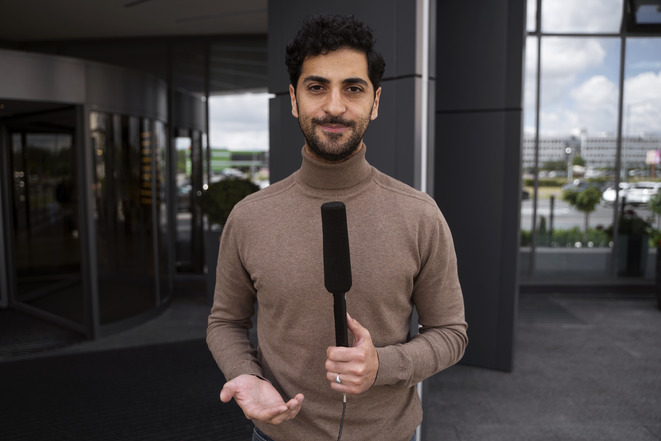
The newsroom is not dying. It is being rebuilt — at speed, under financial pressure, and with tools that did not exist five years ago. For journalists at every career stage, this transformation is not theoretical. It is the environment in which career decisions are made, skills are valued or devalued, and professional trajectories are determined.
This blog is written for two audiences: recent graduates considering whether a career in journalism is viable in 2026, and working journalists navigating a profession that has changed more in the past decade than in the previous century. Both groups need the same clarity: what journalism jobs exist now, what skills those jobs demand, and what the realistic career arc looks like in a media landscape shaped by digital platforms, audience fragmentation, and artificial intelligence.
Table of Contents
- The State of Journalism Employment in 2026: What the Numbers Show
- Jobs in Journalism: Where the Hiring Is Happening
- The Impact of Technology on Journalism: Tools That Have Changed the Craft
- AI in Digital Journalism: Complement, Not Replacement
- Skills Required for Journalism Jobs: The Non-Negotiable Capabilities
- Skills Required for Digital Journalism: The Technical Additions
- When Does Postgraduate Education Add Value?
- Media Industry Job Trends: Where Hiring Is Growing
- What Does the Next Five Years of News Reporting Look Like?
The State of Journalism Employment in 2026: What the Numbers Show
The conversation around journalism career opportunities is often dominated by two competing narratives: one of crisis and one of reinvention. The honest assessment is that both are true, depending on which part of the industry you are looking at.
Traditional print newsrooms have contracted significantly over the past fifteen years. Staff sizes at legacy newspapers and magazines are a fraction of what they were in 2010, and the pace of contraction has not stopped. For journalists whose careers were built in print, this has been a difficult and disruptive transition — one that has required either pivoting to digital roles, moving into communications and corporate content, or leaving the profession entirely.
At the same time, digital media industry growth has created new categories of employment that did not exist a decade ago. Digital-first news organisations, podcast networks, video content studios, data journalism teams, investigative nonprofits funded by grants and philanthropy, and brand journalism divisions within corporations are all hiring — and collectively, they are hiring at a scale that compensates for much of the loss in traditional newsrooms, though not in the same geographic locations or with the same employment structures.
The practical implication for someone entering or navigating journalism in 2026 is this: the profession is not collapsing, but it is reallocating. The opportunities are in digital, data, multimedia, and specialised reporting — not in general-assignment print journalism. Career security is in building a portfolio of demonstrable skills rather than relying on institutional employment. And the geographic concentration of opportunity has shifted decisively toward cities with strong digital media ecosystems — Bangalore, Mumbai, Delhi, and Hyderabad in the Indian context.
The employment reality: Journalism jobs exist in 2026 — but they are structurally different from the journalism jobs of 2010. The candidates who succeed are those who have adapted their skill sets to match where the demand actually is, not where they wish it were.
Jobs in Journalism: Where the Hiring Is Happening
The category of digital journalism jobs is broad, but it is worth breaking into its components to understand what employers are actually hiring for and what each role demands.
Digital Content Reporter — The contemporary equivalent of a general-assignment reporter, but with the expectation of producing content across multiple formats — written articles, video stand-ups, social media threads, and live updates. Typically entry-level, widely available across digital news organisations and media startups.
Multimedia Journalist — A journalist who reports, writes, shoots video, edits, and publishes across platforms. This role represents the convergence of skills that were previously handled by separate teams. High demand in lean digital newsrooms that cannot afford specialist teams for each function.
Data Journalist — Analyses large datasets to identify newsworthy patterns, builds interactive visualisations, and works with developers to present data-driven stories. Requires statistical literacy, proficiency in tools like R or Python, and the ability to translate quantitative findings into narrative. One of the fastest-growing specialisations in journalism.
Video Journalist / Visual Storyteller — Produces short-form and long-form video content for digital platforms, including documentary-style reporting, explainer videos, and social media content. Requires video production, editing, and narrative structuring skills. Increasingly common in newsrooms prioritising video for platform algorithms.
Podcast Producer / Audio Journalist — Creates narrative audio content, conducts interviews, scripts episodes, and manages audio production workflows. The rise of podcasting as a distribution format has created sustained demand for this role, particularly in news organisations expanding into audio.
Social Media Editor — Manages the news organisation's presence across social platforms, crafts platform-specific content, monitors engagement, and adapts stories for virality and reach. Requires understanding of platform algorithms, audience psychology, and real-time news cycles.
Newsletter Writer / Editor — Produces curated email newsletters, often with analysis, commentary, or synthesis of the day's news. Newsletters have become a revenue and audience-retention mechanism for many digital news outlets, creating dedicated roles for writers who can build and sustain subscriber bases.
Investigative Reporter (Digital) — Conducts long-form investigative reporting with digital publication as the primary output. Investigative journalism has found new funding models through nonprofit newsrooms and foundation support, creating opportunities for reporters focused on accountability and public-interest journalism.
SEO Editor / Audience Development Specialist — Optimises content for search engine discoverability, analyses traffic data, and works with editorial teams to improve reach and engagement. Sits at the intersection of editorial and digital marketing — a role that traditional journalists often resist but that digital-first organisations consider essential.
Fact-Checker / Verification Specialist — Verifies claims, sources, and visual content before publication. Misinformation and deepfakes have made this a critical function in credible newsrooms, creating dedicated roles for journalists trained in verification methodologies and open-source intelligence techniques.
For job seekers: The digital journalism job market rewards versatility. A candidate who can report, shoot video, analyse data, and write for multiple platforms is significantly more employable than one who can only produce written features — even if the written work is of higher quality.
The Impact of Technology on Journalism: Tools That Have Changed the Craft
The impact of technology is visible at every stage of the reporting process — from how stories are discovered, to how they are produced, to how they reach audiences. Understanding which technologies matter most in 2026 is essential for anyone building or rebuilding a journalism career.
Content management systems and digital publishing platforms have made it possible for small teams to publish at the pace and scale that previously required large editorial operations. Platforms like WordPress, Ghost, and Substack have democratised publishing infrastructure, enabling independent journalists and small newsrooms to compete on distribution without needing the IT and production teams that legacy media required.
Data analysis and visualisation tools — including Excel, Google Sheets, Tableau, Datawrapper, and programming languages like Python and R — have transformed investigative and explanatory journalism. Reporters who can work with datasets are now able to surface stories that would have been invisible in an era when journalism relied exclusively on interviews and documents.
Video editing and production software — Adobe Premiere, Final Cut Pro, and increasingly mobile editing apps — have made video journalism accessible to individual reporters without requiring dedicated videographers or editors. This has enabled the shift toward multimedia journalism as a baseline expectation rather than a specialisation.
Social listening and analytics platforms allow journalists to identify trending topics, monitor public sentiment, and measure the reach and engagement of their work in real time. Tools like CrowdTangle, Google Trends, and native platform analytics have made audience data a standard input to editorial decision-making — for better and worse.
AI-powered transcription, translation, and research tools are compressing the time required for routine journalism tasks. Automated transcription through Otter.ai or similar platforms, translation services, and AI research assistants are making it possible for journalists to produce more work, faster — though with the persistent risk of reduced depth if speed is prioritised over rigour.
Technology reality: The tools have changed the economics of journalism, reducing the cost of production and increasing the output expectations. Journalists who treat these tools as force multipliers for their reporting, rather than replacements for it, gain the efficiency advantage without sacrificing craft.
AI in Digital Journalism: Complement, Not Replacement
The question of AI in journalism generates more anxiety than almost any other topic in the profession — and for understandable reasons. Generative AI can now produce serviceable news articles, summaries, and even investigative leads. The question for journalists is not whether AI can do parts of their job. It is whether it can do the parts that matter most.
What AI does well in journalism: automated transcription and summarisation, data analysis and pattern recognition at scale, translation, and the production of routine, formulaic content — earnings reports, sports summaries, weather updates. These are tasks that consume time but do not require editorial judgment or narrative craft. AI handling them frees journalists to focus on work that requires human capacities: source cultivation, investigative persistence, ethical judgment, and storytelling that connects emotionally with audiences.
What AI does poorly: understanding context that is not explicitly stated in training data, making ethical decisions about what to publish and how to frame it, building trust with sources who need to be convinced to share sensitive information, and producing journalism that has voice, perspective, and the kind of narrative depth that makes people care. These are not skills that will be automated in the foreseeable future — they are the core of what makes journalism valuable.
The strategic position for journalists in 2026 is not to resist AI but to position themselves on the other side of the automation line. Learn to use AI tools for transcription, research acceleration, and draft generation — but do not rely on them for the thinking, the sourcing, the ethical framing, or the narrative construction that defines quality journalism. The journalists who thrive in the AI era are those who leverage the tools for efficiency while protecting the parts of the craft that require human judgment.
AI positioning: AI is a tool that handles the mechanical. Journalism is the judgment, the ethics, the relationships, and the storytelling. The two are not in competition — they are in a relationship where the journalist who uses AI well produces better work faster than the one who refuses to engage with it.
Skills Required for Journalism Jobs: The Non-Negotiable Capabilities
The skills necessary for jobs in 2026 include traditional craft skills alongside digital and technical capabilities that were not part of journalism training even a decade ago. The following list represents the baseline — not the specialisation, but the foundation every working journalist needs.
News Judgment and Story Sense — The ability to identify what is newsworthy, what audiences care about, and what angle makes a story compelling. This is the core editorial skill that no amount of technical proficiency can replace — and it is developed through reading widely, consuming news critically, and learning from experienced editors.
Research and Verification — Knowing how to find credible sources, verify claims, cross-check information, and identify misinformation. In an era of information overload and deliberate disinformation, verification is not optional — it is foundational to credible journalism.
Interviewing and Source Cultivation — The ability to ask the right questions, build rapport with sources, and extract information that people are often reluctant to share. Great interviewing is part preparation, part psychology, and part ethics — and it remains one of the most important skills in the profession.
Clear, Concise Writing — The ability to write in a way that is immediately understandable, grammatically sound, and stylistically appropriate for the platform and audience. Journalism writing is not literary writing — it is functional communication, and clarity is its highest virtue.
Ethical Judgment and Editorial Standards — Understanding the difference between what is legal to publish and what is ethical to publish, how to balance public interest against individual privacy, and how to navigate conflicts of interest. Ethics is not a constraint on journalism — it is what makes journalism credible.
Deadline Management and Time Efficiency — The ability to produce accurate, well-written work under time pressure. Journalism operates on cycles — daily, hourly, or in breaking news situations, minute-by-minute. The capacity to work quickly without sacrificing accuracy is non-negotiable.
Adaptability Across Platforms — The willingness and ability to write for web, adapt stories for social media, appear on camera or audio, and adjust tone and structure based on where the story will be published. Platform fluency is now a baseline expectation, not a bonus skill.
Foundation principle: Technical skills open doors. But the journalists who sustain long careers are those who have mastered the craft fundamentals: judgment, ethics, interviewing, and the ability to tell stories that matter in ways that connect with audiences.
Skills Required for Digital Journalism: The Technical Additions
Beyond the foundational journalism skills, there are skills necessary for digital journalism as well. These include a layer of technical and platform-specific capabilities that are now expected of most working journalists, particularly those entering the profession or those looking to remain competitive in hiring.
CMS and Web Publishing — Proficiency with content management systems — WordPress, Drupal, or proprietary newsroom platforms. Journalists are now expected to publish their own work, format it for the web, add metadata, and optimise it for search and social distribution.
Basic HTML and Web Editing — Understanding enough HTML to fix formatting issues, embed multimedia, troubleshoot broken links or display problems. This is not programming — it is web literacy, and it is increasingly standard.
Social Media Strategy and Execution — The ability to craft platform-specific posts, understand what works on Twitter, Instagram, LinkedIn, and emerging platforms, and engage with audiences in comments and threads. Social media is not just distribution — it is also reporting, source discovery, and audience building.
SEO Fundamentals — Understanding how search engines surface content, how to write headlines and metadata that improve discoverability, and how to structure articles for both human readers and algorithmic indexing. SEO-aware journalism is more widely read journalism.
Video Shooting and Editing (Basic) — The ability to shoot stable, well-framed video on a smartphone or camera, record clean audio, and perform basic editing in software like Adobe Premiere, Final Cut, or mobile apps. Full production expertise is not required — functional competence is.
Audio Recording and Podcast Production — Recording interviews, editing audio for clarity and pacing, and producing podcast episodes or audio packages. The podcast format has created sustained demand for journalists who can work in audio, and the barrier to entry is lower than for video.
Data Literacy and Spreadsheet Proficiency — The ability to work with datasets in Excel or Google Sheets, perform basic statistical analysis, identify trends, and translate numbers into narrative. Data journalism is no longer a niche — it is an expected dimension of explanatory and investigative reporting.
Analytics and Audience Insights — Reading Google Analytics, understanding traffic patterns, engagement metrics, and what stories are resonating with audiences. Audience data informs editorial decisions in digital newsrooms, and journalists who understand it have more influence over what gets published.
Technical reality: These skills do not make you a journalist — they make you a journalist who can function in a digital newsroom. The craft is still the core. The technical skills are the infrastructure that allows the craft to reach audiences in 2026.
When Does Postgraduate Education Add Value?
The decision to pursue an MA in Journalism and Mass Communication is one that every journalism graduate or aspiring journalist considers at some point. The question is not whether the degree has value — it is when, and for whom.
For fresh graduates entering journalism directly after undergraduate study, an MA in Journalism provides structured training in reporting, ethics, media law, and specialisation in areas like investigative journalism, broadcast, or digital media. It also provides internship access, networking with faculty and peers, and a credential that many newsrooms still consider when hiring for entry-level roles. For candidates without prior journalism training or experience, the MA is often the most direct route into the profession.
For working journalists, the value proposition is different. An MA pursued mid-career — particularly through an online or part-time format — allows professionals to formalise skills they have been building in practice, gain exposure to theoretical frameworks and research methodologies, and position themselves for editorial or leadership roles that often require postgraduate qualifications. It also provides a credential for those considering a transition into academia, communications consulting, or policy analysis.
The honest assessment is that an MA in Journalism is not a guarantee of employment — journalism hiring is driven more by portfolio, demonstrated skills, and professional network than by academic credentials. But for candidates who use the programme to build a strong portfolio, develop specialised skills, and establish relationships with working journalists and editors, the degree is a credible accelerator.
MA positioning: An MA in Journalism is worth pursuing if you are entering the field without prior training, or if you are mid-career and need the credential for advancement. It is less valuable if you already have strong clips, a professional network, and the skills the market is hiring for — at which point, investing in portfolio work may return more than investing in a degree.
Media Industry Job Trends: Where Hiring Is Growing
Understanding media industry job trends in 2026 requires distinguishing between the sectors that are contracting and those that are actively hiring. The aggregate numbers can be misleading — overall journalism employment is relatively stable, but the distribution of that employment has shifted dramatically.
Digital-first news organisations — including The Wire, Scroll, The Quint, and newer entrants — continue to hire reporters, editors, and multimedia producers, particularly those with strong digital skills and specialisation in politics, technology, or investigative work. These organisations operate on leaner budgets than legacy media but are more willing to experiment with formats and invest in talent that can drive audience growth.
Podcast networks and audio content studios are expanding rapidly, creating demand for producers, sound engineers, and narrative journalists who can work in long-form audio. The podcast advertising market in India has grown substantially, providing revenue to support hiring in this space.
Data journalism and investigative nonprofits — funded by foundations, grants, and reader memberships — are hiring specialist reporters who can work on long-timeline, high-impact stories. Organisations in this space often offer more job security and editorial independence than commercial newsrooms, though at lower pay scales.
Corporate content, brand journalism, and in-house media teams within large organisations are absorbing a significant share of journalism talent. These roles — often titled Content Manager, Communications Specialist, or Editorial Lead — pay better than traditional newsroom roles and offer more stability, though they involve producing content that serves organisational goals rather than public-interest journalism.
Freelance and independent journalism — enabled by platforms like Substack, Patreon, and YouTube — represents an expanding category of self-employment. Successful independent journalists can earn competitive incomes and retain full editorial control, but the path requires audience-building, business management, and the tolerance for income volatility that institutional employment typically avoids.
Hiring insight: The growth areas in journalism employment are digital, audio, data, and corporate content. The contraction is in legacy print and traditional broadcast. Position your skills and job search toward where the demand actually is, not where you wish it were.
What Does the Next Five Years of News Reporting Look Like?
Projecting the future of news reporting is not speculative — the directions are already visible in how leading newsrooms are investing, what platforms are prioritising in their algorithms, and where audience attention is moving.
AI-augmented reporting will become standard practice. Journalists will use AI for transcription, translation, initial research, and draft generation — allowing them to produce more stories and focus their time on the high-value work of interviewing, verification, and narrative construction. Newsrooms that integrate AI thoughtfully will gain productivity advantages; those that use it carelessly will produce work that readers recognise as formulaic and low-value.
Video and visual storytelling will continue to dominate platform algorithms and audience engagement metrics. Text journalism will not disappear, but the distribution advantage will increasingly belong to multimedia content, which means journalists who cannot or will not work in video will find their reach limited.
Personalisation and niche journalism will expand. The era of mass-market general news is ending; the future belongs to journalism that serves specific audiences with specific interests at depth. Journalists who can build and sustain engaged niche audiences — through newsletters, podcasts, or social followings — will have more career security than those who rely on broad, undifferentiated news coverage.
Collaborative and transnational journalism will grow in importance. The most impactful investigative work increasingly involves coordination across newsrooms, often across borders. Journalists who can work in collaborative environments, share sources and data responsibly, and operate within international networks will have access to the kinds of stories that institutional solo journalism can no longer produce.
The trajectory: The future of news reporting is more digital, more visual, more specialised, and more dependent on journalists who can work with AI tools without being replaced by them. The profession is not ending — it is evolving faster than its training institutions can adapt to.
Conclusion
The journalism profession in 2026 is not for everyone — but it remains one of the most intellectually demanding and publicly consequential careers available to those who are suited to it. The work has changed. The skills required have expanded. The institutional structures that once provided stability have weakened. But the core purpose — making power accountable, making complexity understandable, and telling stories that connect people to the world beyond their immediate experience — has not diminished in importance.
For fresh graduates deciding whether to enter the field, and for working journalists navigating how to sustain careers in it, the guidance is the same: invest in the craft, build technical fluency, specialise where demand is strong, and treat your portfolio and professional network as more valuable than any single job. The profession rewards those who approach it as a practice to be continuously developed, not a destination to be reached.
The dominant digital trend in journalism for 2026 is the integration of AI tools into routine reporting workflows — transcription, research assistance, and draft generation — combined with the continued prioritisation of video and audio content by platform algorithms. Short-form video, particularly vertical video optimised for mobile, is commanding the largest share of audience attention, which is reshaping editorial priorities across newsrooms. At the same time, newsletter-based journalism and membership models are growing as revenue strategies, creating opportunities for journalists who can build and sustain direct relationships with audiences rather than relying on advertising or platform distribution alone.
No, not in any timeline that is currently predictable. AI can automate routine, formulaic content production — earnings reports, sports summaries, event recaps — but it cannot conduct investigative interviews, make ethical editorial decisions, build source relationships that require trust and confidentiality, or produce narrative journalism that connects emotionally with audiences. The jobs most at risk are those that involve low-complexity, high-volume content production. The jobs that remain secure are those that require judgment, original reporting, ethical reasoning, and the kind of storytelling craft that audiences recognise as distinctly human. Journalists who position themselves on the side of the automation line that requires human capacities will not be replaced — they will be augmented.
Journalism in 2025 is a viable career for candidates who enter it with clear expectations and the right skill set. It is not a career that offers the institutional security or predictable salary progression it once did. It is, however, a career that offers intellectual challenge, public-interest impact, and the opportunity to work on stories that matter — provided you are willing to build a portfolio of skills that includes digital proficiency, multimedia capability, and the adaptability to work across formats and platforms. The journalists who succeed are those who treat the profession as a craft to be continuously developed, not a credential to be held. If you are motivated by storytelling, accountability journalism, and the challenge of making complex information accessible, journalism remains one of the most consequential careers available.
Digital technology has changed journalism across every dimension: how stories are discovered, how they are reported, how they are produced, and how they reach audiences. The internet eliminated the geographic and distribution constraints that defined print and broadcast journalism, making it possible for small newsrooms to compete on reach with legacy institutions. Social media turned audiences into sources and collaborators, while also accelerating news cycles to a pace that makes sustained investigative work harder to justify economically. Data availability and analysis tools have made it possible to surface stories that would have been invisible in an era of purely interview-based journalism. And AI is now compressing the time required for transcription, translation, and initial research — allowing journalists to produce more, faster, though with the persistent risk of prioritising speed over depth.
The fastest-growing career opportunities in digital journalism include: data journalism and visualisation roles, which combine statistical analysis with narrative storytelling; podcast production and audio journalism, driven by the expansion of the podcast advertising market; audience development and engagement roles, which sit at the intersection of editorial and marketing; fact-checking and verification specialists, responding to the misinformation crisis; and newsletter writers who build direct subscriber relationships. Additionally, hybrid roles that combine journalism training with technical capability — such as newsroom developers who build interactive graphics and data tools, or product managers who shape how news organisations deliver content on digital platforms — are increasingly common and well-compensated.
Digital journalism offers employment stability comparable to other knowledge-work professions in 2026, which is to say, it is more stable than gig work but less stable than government employment or tenured academic positions. The career security in digital journalism comes not from institutional tenure but from building a portfolio of demonstrable skills, a professional network, and a body of published work that makes you competitive in a hiring market where job changes every 3–5 years are normal. Journalists who develop specialisation in high-demand areas — data, investigative work, audio, or video — and who maintain technical fluency with digital tools have consistent access to employment. Those who rely on generalist reporting skills alone face a more competitive and unstable market.